Input–Output: Stepwise Number and Word Rearrangement
1. What is an input–output machine?
An input is an ordered row of numbers, words or both. A machine applies the same rule repeatedly and displays intermediate steps. Your task may be to identify a rule, apply it to another input, find a token at a particular step, or determine the final output.
The machine in a reasoning question is an abstract rule, not a computer program you must know. Observe what changes and what remains fixed. A final sorted row does not explain how the intermediate steps were produced.
2. Essential vocabulary and conventions
| Term | Meaning |
|---|---|
| Token | One number or one word; a two-digit number is one token |
| Locked position | A position already assigned permanently by the rule |
| Unlocked portion | Tokens still eligible for selection |
| Stable remainder | Unselected tokens retain their relative order |
| Transformation | Changing a token's value or letters |
| Rearrangement | Moving tokens without changing their values |
Use separators to avoid confusing adjacent numbers. Positions are counted from 1. In a row of N tokens, position r from the right equals N−r+1 from the left. The input is Step 0 unless the question explicitly says otherwise.
3. How to discover a rule from shown steps
Compare Input → Step 1, then Step 1 → Step 2. Identify the selected token, its destination and the portion that stays fixed. Test the candidate rule on every shown transition.
Ask: Is the selection smallest/largest, dictionary order, word length or digit sum? Is one token moved or a pair? Are odd and even steps different? Does the machine move a token while preserving the remainder, or swap it with another token? Are values altered?
For example, Input 42 17 35 24, Step 1 17 42 35 24, Step 2 17 24 42 35 is consistent with selecting the smallest remaining number to the next left position while preserving other tokens. A rule that swaps the minimum with the first unlocked token also matches Step 1 here, but predicts 17 24 35 42 at Step 2 and is therefore rejected.
A short trace need not determine a unique rule among every imaginable rule. Use the question's stated machine constraints and test the offered alternatives. Never invent certainty from one coincidental match.
4. Increasing numbers from the left: worked example
Rule: lock the smallest remaining number at the next left position; preserve the relative order of all other tokens.
| Stage | Sequence | Newly locked |
|---|---|---|
| Input | 42 17 35 24 | None |
| Step 1 | 17 42 35 24 | 17 |
| Step 2 | 17 24 42 35 | 24 |
| Step 3 | 17 24 35 42 | 35 |
| Step 4 | 17 24 35 42 | 42 |
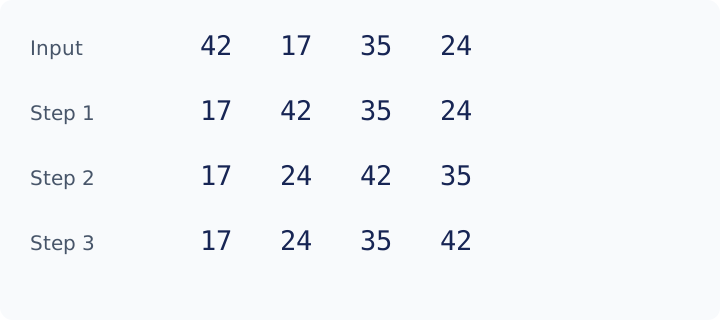
Step 2 is not the final sorted output. The unselected 42 remains before 35. Step 4 has the same visible row as Step 3 but may still be a processing step if the rule explicitly processes every token. See the step-count convention below.
5. Decreasing numbers and placement from the right
Selecting the largest remaining number to successive left positions produces decreasing order. Selecting the largest remaining number to the rightmost unlocked position produces increasing order when complete.
With input 42 17 35 24, the right-placement machine gives:
- Step 1:
17 35 24 | 42. - Step 2:
17 24 | 35 42. - Step 3:
17 | 24 35 42.
The vertical bar separates the remaining middle from the locked right block; it is not a token. Each new right-side selection is placed before the previously locked suffix. Appending it after the suffix would move a locked token and change the rule.
6. Word order: dictionary and reverse dictionary
Compare English words letter by letter. If first letters match, compare the second letters, then later letters. If one word is a complete prefix of another, the shorter word comes first: ant precedes anthem. For apple, apricot, banana, the order is apple → apricot → banana.
Reverse dictionary order reverses this comparison. It does not reverse the letters inside each word. In this chapter, English word tokens remain in English on the Hindi page because changing their language would change the ordering problem. Instructions and explanations are translated.
7. Word length and tie-breaks
A length-based machine may select shortest or longest words first. Equal lengths need a tie-break: alphabetical order, reverse order or original input order. Do not assume one when it is not given.
Example: input pear fig apple plum. Under shortest-first with alphabetical ties, selections are fig, pear, plum, apple. Both pear and plum have four letters; pear comes first alphabetically. If the rule used original order for ties, that would be a different machine.
For numbers ordered by digit sum, 24 and 51 both have sum 6. A smaller-number tie-break selects 24 first. Digit sum does not mean the number itself: 80 has digit sum 8, whereas 19 has sum 10, so 80 comes earlier under increasing digit sum.
8. Mixed numbers and words at opposite ends
Keep three separate blocks: locked left | remaining middle | locked right. Alternate selection rules precisely as stated.
Rule for this example: odd steps select the smallest remaining number to the left; even steps select the alphabetically latest remaining word to the right.
| Stage | Full row |
|---|---|
| Input | mango 42 apple 17 berry 35 |
| Step 1 | 17 mango 42 apple berry 35 |
| Step 2 | 17 42 apple berry 35 mango |
| Step 3 | 17 35 42 apple berry mango |
| Step 4 | 17 35 42 apple berry mango |
| Step 5 | 17 35 42 apple berry mango |
| Step 6 | 17 35 42 apple berry mango |
The visible row can stay unchanged while a new token becomes locked. After Step 2, only 17 and mango are locked; the middle must not be assumed fully processed. These practice inputs have equal numbers of words and numbers, so the alternating rule always has an eligible token.
9. Selecting at both ends of a numerical row
Another machine chooses minimum-left at odd steps and maximum-right at even steps. Maintain the suffix in its existing order; do not sort the middle early. With six numbers, after two steps one is locked at each end, leaving four eligible numbers.
Do not confuse “two-end arrangement” with “two tokens per step”. An alternating machine processes one token per step. A paired machine can process one number and one word in a single step. Its step count and intermediate output differ.
10. Transformations and original identities
Some machines change the selected value. Separate which token is chosen from what value is displayed.
Example: at step s, take the smallest original unlocked number, add s, and lock the result on the left. Input 24 11 18 gives Step 1 12 24 18, Step 2 12 20 24, Step 3 12 20 27.
A displayed locked value must not re-enter the selection pool. Two outputs could even become equal under a transformation; token identity and locked status still matter. Do not change the unselected numbers unless the rule says to do so. Other possible transformations include squaring, letter shifts or digit reversal, but each requires its own explicit rule.
11. Step count: read the stopping rule
There is no universal “N−1 steps” answer. These are different conventions:
- Process one token per step, including the last: N steps.
- Stop as soon as the final arrangement is reached: possibly fewer steps.
- Skip selections that need no movement: count actual movements only.
- Process two eligible tokens per step: the count depends on pairing and any leftover token.
All questions in this chapter's bank explicitly count one selection as one step, even without visible movement, and process the last token too. This makes step references unambiguous. In a different exam, follow its stated or demonstrated convention.
12. Position, neighbours and reverse questions
Write the requested step, then count positions from the stated side. For six tokens, second from the right is fifth from the left. “Immediately left of X” refers to its neighbour in that particular step, not the original input.
An intermediate row usually does not identify the original input uniquely. Under minimum-left stable selection, both 30 10 20 and 10 30 20 can yield Step 1 10 30 20. Reverse recovery needs additional constraints; “cannot be determined” can be correct. Likewise, do not claim a unique final output if a missing tie-break can change the order.
13. Common errors and a faster method
| Error | Correction |
|---|---|
| Sorting the whole row at Step 1 | Move only the permitted token(s) |
| Swapping when stable movement is required | Remove the selected token, then insert it at the boundary |
| Counting a number's digits as separate tokens | Treat each separated entry as one token |
| Choosing from the locked block | Maintain a separate eligible middle |
| Reversing words instead of dictionary order | Compare complete words by the specified key |
| Forgetting odd/even alternation | Write the step number before selecting |
| Assuming every step must visibly change | Apply the stated processing convention |
| Guessing the input from the output | Check whether the mapping is reversible |
For speed, prepare the selection order separately, but preserve the original relative order of unselected tokens at each step. This lets you predict which item locks next without accidentally replacing the middle by its sorted version.
14. Revision and practice plan
Identify the selection key → destination → stability rule → tie-break → odd/even behaviour → transformation → stopping rule. Validate the rule on two or more shown transitions whenever available.
The online bank has 80 questions: 20 numerical machines, 20 word machines, 20 mixed machines and 20 advanced machines using opposite ends, digit sums or transformations. Questions ask for intermediate rows, positions, selected original tokens and final outputs. All rules are explicitly supplied so you can practise exact execution before tackling inferred-rule variants. Four focused tests contain 20 questions each; complete practice contains all 80. The following 30 exercises include full traces in the answer section.
15. Practice questions
Practice 01
Input: 79 | 44 | 91 | 42 | 82 | 45.
Machine rule: At each step, select the smallest unlocked number and move it to the next position on the LEFT. Preserve the relative order of all other unlocked tokens; keep earlier locked positions fixed. One selection is one step, even if the selected token is already in that position. Process every token, including the last.
What is the full sequence after Step 2?
- A: 42 | 44 | 79 | 91 | 82 | 45
- B: 82 | 91 | 79 | 45 | 44 | 42
- C: 45 | 42 | 44 | 79 | 82 | 91
- D: 82 | 45 | 91 | 79 | 44 | 42
Practice 02
Input: 48 | 32 | 41 | 88 | 84 | 36.
Machine rule: At each step, select the largest unlocked number and move it to the next position on the LEFT. Preserve the relative order of all other unlocked tokens; keep earlier locked positions fixed. One selection is one step, even if the selected token is already in that position. Process every token, including the last.
Which token is 2 from the LEFT after Step 3?
- A: 41
- B: 84
- C: 36
- D: 32
Practice 03
Input: 92 | 20 | 58 | 24 | 56 | 12.
Machine rule: At each step, select the largest unlocked number and move it to the rightmost unlocked position. Preserve the relative order of all other unlocked tokens; keep earlier locked positions fixed. One selection is one step, even if the selected token is already in that position. Process every token, including the last.
Which original token is selected at Step 4?
- A: 58
- B: 20
- C: 24
- D: 12
Practice 04
Input: 27 | 58 | 69 | 92 | 19 | 40.
Machine rule: At each step, select the smallest unlocked number and move it to the next position on the LEFT. Preserve the relative order of all other unlocked tokens; keep earlier locked positions fixed. One selection is one step, even if the selected token is already in that position. Process every token, including the last.
What is the final output after every token has been processed?
- A: 40 | 19 | 58 | 92 | 27 | 69
- B: 27 | 92 | 19 | 69 | 40 | 58
- C: 27 | 19 | 58 | 69 | 40 | 92
- D: 19 | 27 | 40 | 58 | 69 | 92
Practice 05
Input: 39 | 18 | 32 | 58 | 77 | 94.
Machine rule: At each step, select the smallest unlocked number and move it to the next position on the LEFT. Preserve the relative order of all other unlocked tokens; keep earlier locked positions fixed. One selection is one step, even if the selected token is already in that position. Process every token, including the last.
Which original token is selected at Step 2?
- A: 77
- B: 18
- C: 32
- D: 39
Practice 06
Input: 28 | 82 | 67 | 86 | 84 | 19.
Machine rule: At each step, select the smallest unlocked number and move it to the next position on the LEFT. Preserve the relative order of all other unlocked tokens; keep earlier locked positions fixed. One selection is one step, even if the selected token is already in that position. Process every token, including the last.
Which token is 4 from the LEFT after Step 2?
- A: 28
- B: 67
- C: 82
- D: 19
Practice 07
Input: 35 | 68 | 14 | 62 | 63 | 50.
Machine rule: At each step, select the largest unlocked number and move it to the rightmost unlocked position. Preserve the relative order of all other unlocked tokens; keep earlier locked positions fixed. One selection is one step, even if the selected token is already in that position. Process every token, including the last.
Which original token is selected at Step 4?
- A: 14
- B: 63
- C: 50
- D: 68
Practice 08
Input: 55 | 34 | 91 | 39 | 20 | 78.
Machine rule: At each step, select the largest unlocked number and move it to the next position on the LEFT. Preserve the relative order of all other unlocked tokens; keep earlier locked positions fixed. One selection is one step, even if the selected token is already in that position. Process every token, including the last.
What is the final output after every token has been processed?
- A: 78 | 34 | 55 | 20 | 91 | 39
- B: 34 | 20 | 55 | 91 | 39 | 78
- C: 91 | 55 | 20 | 39 | 78 | 34
- D: 91 | 78 | 55 | 39 | 34 | 20
Practice 09
Input: banana | water | lemon | stone | forest | delta.
Machine rule: At each step, select the shortest unlocked English word and move it to the next position on the LEFT; break equal-length ties by alphabetical order. Preserve the relative order of all other unlocked tokens; keep earlier locked positions fixed. One selection is one step, even if the selected token is already in that position. Process every token, including the last.
What is the full sequence after Step 4?
- A: delta | lemon | stone | water | banana | forest
- B: forest | stone | banana | water | delta | lemon
- C: banana | delta | forest | stone | water | lemon
- D: banana | water | delta | lemon | forest | stone
Practice 10
Input: water | cedar | berry | rose | light | apricot.
Machine rule: At each step, select the alphabetically earliest unlocked English word and move it to the next position on the LEFT. Preserve the relative order of all other unlocked tokens; keep earlier locked positions fixed. One selection is one step, even if the selected token is already in that position. Process every token, including the last.
Which token is 4 from the LEFT after Step 2?
- A: berry
- B: cedar
- C: rose
- D: water
Practice 11
Input: pearl | cherry | apricot | river | tiger | dream.
Machine rule: At each step, select the alphabetically latest unlocked English word and move it to the next position on the LEFT. Preserve the relative order of all other unlocked tokens; keep earlier locked positions fixed. One selection is one step, even if the selected token is already in that position. Process every token, including the last.
Which original token is selected at Step 3?
- A: dream
- B: river
- C: pearl
- D: apricot
Practice 12
Input: rose | dream | light | jasmine | eagle | river.
Machine rule: At each step, select the shortest unlocked English word and move it to the next position on the LEFT; break equal-length ties by alphabetical order. Preserve the relative order of all other unlocked tokens; keep earlier locked positions fixed. One selection is one step, even if the selected token is already in that position. Process every token, including the last.
What is the final output after every token has been processed?
- A: river | light | eagle | jasmine | dream | rose
- B: jasmine | dream | eagle | river | rose | light
- C: jasmine | light | eagle | dream | river | rose
- D: rose | dream | eagle | light | river | jasmine
Practice 13
Input: eagle | pearl | banana | green | silver | honey.
Machine rule: At each step, select the alphabetically latest unlocked English word and move it to the next position on the LEFT. Preserve the relative order of all other unlocked tokens; keep earlier locked positions fixed. One selection is one step, even if the selected token is already in that position. Process every token, including the last.
What is the full sequence after Step 3?
- A: silver | pearl | honey | eagle | banana | green
- B: silver | honey | eagle | pearl | green | banana
- C: honey | green | banana | silver | pearl | eagle
- D: banana | pearl | silver | honey | eagle | green
Practice 14
Input: banana | apricot | mango | delta | willow | pearl.
Machine rule: At each step, select the alphabetically earliest unlocked English word and move it to the next position on the LEFT. Preserve the relative order of all other unlocked tokens; keep earlier locked positions fixed. One selection is one step, even if the selected token is already in that position. Process every token, including the last.
Which token is 4 from the LEFT after Step 2?
- A: willow
- B: delta
- C: mango
- D: apricot
Practice 15
Input: rose | forest | pearl | zebra | cedar | olive.
Machine rule: At each step, select the shortest unlocked English word and move it to the next position on the LEFT; break equal-length ties by alphabetical order. Preserve the relative order of all other unlocked tokens; keep earlier locked positions fixed. One selection is one step, even if the selected token is already in that position. Process every token, including the last.
Which original token is selected at Step 4?
- A: rose
- B: forest
- C: pearl
- D: zebra
Practice 16
Input: ocean | water | zebra | light | tiger | eagle.
Machine rule: At each step, select the alphabetically earliest unlocked English word and move it to the next position on the LEFT. Preserve the relative order of all other unlocked tokens; keep earlier locked positions fixed. One selection is one step, even if the selected token is already in that position. Process every token, including the last.
What is the final output after every token has been processed?
- A: eagle | tiger | ocean | zebra | light | water
- B: tiger | ocean | light | eagle | zebra | water
- C: light | zebra | eagle | ocean | water | tiger
- D: eagle | light | ocean | tiger | water | zebra
Practice 17
Input: violet | 59 | eagle | 90 | 53 | delta.
Machine rule: Odd steps: move the smallest unlocked number to the next LEFT position. Even steps: move the alphabetically latest unlocked English word to the rightmost unlocked position. Preserve the relative order of all other unlocked tokens; keep earlier locked positions fixed. One selection is one step, even if the selected token is already in that position. Process every token, including the last.
What is the full sequence after Step 3?
- A: 53 | 59 | eagle | 90 | delta | violet
- B: delta | 59 | violet | 53 | 90 | eagle
- C: violet | 53 | eagle | 90 | 59 | delta
- D: violet | eagle | delta | 53 | 59 | 90
Practice 18
Input: lemon | 88 | 71 | jasmine | rose | 24.
Machine rule: Odd steps: move the smallest unlocked number to the next LEFT position. Even steps: move the alphabetically latest unlocked English word to the rightmost unlocked position. Preserve the relative order of all other unlocked tokens; keep earlier locked positions fixed. One selection is one step, even if the selected token is already in that position. Process every token, including the last.
Which token is 6 from the LEFT after Step 4?
- A: 88
- B: rose
- C: 71
- D: 24
Practice 19
Input: 41 | 95 | forest | apple | willow | 24.
Machine rule: Odd steps: move the smallest unlocked number to the next LEFT position. Even steps: move the alphabetically latest unlocked English word to the rightmost unlocked position. Preserve the relative order of all other unlocked tokens; keep earlier locked positions fixed. One selection is one step, even if the selected token is already in that position. Process every token, including the last.
What is the full sequence after Step 4?
- A: 24 | 41 | 95 | apple | forest | willow
- B: forest | 41 | willow | 24 | apple | 95
- C: 41 | willow | 95 | apple | 24 | forest
- D: 95 | willow | 41 | forest | apple | 24
Practice 20
Input: zebra | 17 | ocean | jasmine | 97 | 42.
Machine rule: Odd steps: move the smallest unlocked number to the next LEFT position. Even steps: move the alphabetically latest unlocked English word to the rightmost unlocked position. Preserve the relative order of all other unlocked tokens; keep earlier locked positions fixed. One selection is one step, even if the selected token is already in that position. Process every token, including the last.
What is the final output after every token has been processed?
- A: ocean | zebra | 97 | 42 | jasmine | 17
- B: ocean | jasmine | 42 | 97 | zebra | 17
- C: ocean | 42 | zebra | 97 | jasmine | 17
- D: 17 | 42 | 97 | jasmine | ocean | zebra
Practice 21
Input: delta | 19 | 61 | flame | 69 | tiger.
Machine rule: Odd steps: move the smallest unlocked number to the next LEFT position. Even steps: move the alphabetically latest unlocked English word to the rightmost unlocked position. Preserve the relative order of all other unlocked tokens; keep earlier locked positions fixed. One selection is one step, even if the selected token is already in that position. Process every token, including the last.
What is the full sequence after Step 3?
- A: 19 | 61 | delta | flame | 69 | tiger
- B: 69 | delta | flame | 61 | 19 | tiger
- C: 19 | flame | tiger | 61 | delta | 69
- D: tiger | 19 | 61 | delta | flame | 69
Practice 22
Input: 82 | dream | 90 | ocean | 95 | silver.
Machine rule: Odd steps: move the smallest unlocked number to the next LEFT position. Even steps: move the alphabetically latest unlocked English word to the rightmost unlocked position. Preserve the relative order of all other unlocked tokens; keep earlier locked positions fixed. One selection is one step, even if the selected token is already in that position. Process every token, including the last.
Which token is 4 from the LEFT after Step 2?
- A: 90
- B: ocean
- C: dream
- D: 82
Practice 23
Input: 71 | 66 | 17 | 53 | 25 | 93 | 15.
Machine rule: Odd steps: move the smallest unlocked number to the next LEFT position. Even steps: move the largest unlocked number to the rightmost unlocked position. Preserve the relative order of all other unlocked tokens; keep earlier locked positions fixed. One selection is one step, even if the selected token is already in that position. Process every token, including the last.
What is the full sequence after Step 2?
- A: 15 | 71 | 66 | 17 | 53 | 25 | 93
- B: 15 | 93 | 17 | 71 | 25 | 53 | 66
- C: 17 | 53 | 25 | 71 | 66 | 15 | 93
- D: 71 | 17 | 53 | 93 | 25 | 15 | 66
Practice 24
Input: 45 | 37 | 88 | 77 | 46 | 56 | 12.
Machine rule: At each step, select the unlocked number with the smallest digit sum; break ties by the smaller original number. Move it to the next LEFT position without changing its value. Preserve the relative order of all other unlocked tokens; keep earlier locked positions fixed. One selection is one step, even if the selected token is already in that position. Process every token, including the last.
Which token is 6 from the LEFT after Step 3?
- A: 56
- B: 46
- C: 45
- D: 88
Practice 25
Input: 39 | 72 | 96 | 42 | 77 | 30 | 75.
Machine rule: At step s, select the smallest ORIGINAL unlocked number, add s to it, and lock the result at the next LEFT position. Locked results are never selected again. Preserve the relative order of all other unlocked tokens; keep earlier locked positions fixed. One selection is one step, even if the selected token is already in that position. Process every token, including the last.
Which original token is selected at Step 4?
- A: 30
- B: 39
- C: 72
- D: 77
Practice 26
Input: 46 | 20 | 22 | 37 | 47 | 45 | 86.
Machine rule: At step s, select the smallest ORIGINAL unlocked number, add s to it, and lock the result at the next LEFT position. Locked results are never selected again. Preserve the relative order of all other unlocked tokens; keep earlier locked positions fixed. One selection is one step, even if the selected token is already in that position. Process every token, including the last.
Which token is 3 from the LEFT after Step 4?
- A: 86
- B: 40
- C: 21
- D: 24
Practice 27
Input: 96 | 97 | 45 | 42 | 64 | 77 | 71.
Machine rule: At step s, select the smallest ORIGINAL unlocked number, add s to it, and lock the result at the next LEFT position. Locked results are never selected again. Preserve the relative order of all other unlocked tokens; keep earlier locked positions fixed. One selection is one step, even if the selected token is already in that position. Process every token, including the last.
What is the full sequence after Step 4?
- A: 43 | 47 | 67 | 75 | 96 | 97 | 77
- B: 75 | 96 | 77 | 97 | 43 | 67 | 47
- C: 47 | 77 | 67 | 96 | 43 | 97 | 75
- D: 77 | 67 | 75 | 47 | 96 | 97 | 43
Practice 28
Input: 75 | 36 | 49 | 87 | 23 | 32 | 85.
Machine rule: At step s, select the smallest ORIGINAL unlocked number, add s to it, and lock the result at the next LEFT position. Locked results are never selected again. Preserve the relative order of all other unlocked tokens; keep earlier locked positions fixed. One selection is one step, even if the selected token is already in that position. Process every token, including the last.
What is the final output after every token has been processed?
- A: 39 | 91 | 94 | 34 | 24 | 80 | 53
- B: 94 | 53 | 80 | 34 | 91 | 24 | 39
- C: 39 | 94 | 34 | 80 | 53 | 24 | 91
- D: 24 | 34 | 39 | 53 | 80 | 91 | 94
Practice 29
Input: 64 | 57 | 29 | 34 | 50 | 17 | 69.
Machine rule: At each step, select the unlocked number with the smallest digit sum; break ties by the smaller original number. Move it to the next LEFT position without changing its value. Preserve the relative order of all other unlocked tokens; keep earlier locked positions fixed. One selection is one step, even if the selected token is already in that position. Process every token, including the last.
What is the full sequence after Step 3?
- A: 50 | 34 | 17 | 64 | 57 | 29 | 69
- B: 69 | 29 | 17 | 34 | 57 | 50 | 64
- C: 69 | 64 | 57 | 29 | 17 | 34 | 50
- D: 69 | 50 | 29 | 57 | 64 | 17 | 34
Practice 30
Input: 85 | 31 | 16 | 20 | 56 | 84 | 58.
Machine rule: At each step, select the unlocked number with the smallest digit sum; break ties by the smaller original number. Move it to the next LEFT position without changing its value. Preserve the relative order of all other unlocked tokens; keep earlier locked positions fixed. One selection is one step, even if the selected token is already in that position. Process every token, including the last.
What is the final output after every token has been processed?
- A: 31 | 56 | 20 | 16 | 58 | 85 | 84
- B: 20 | 16 | 31 | 84 | 85 | 58 | 56
- C: 84 | 16 | 20 | 58 | 85 | 31 | 56
- D: 20 | 31 | 16 | 56 | 84 | 58 | 85
16. Answers and step-by-step solutions
Answer 01
A: 42 | 44 | 79 | 91 | 82 | 45
| Step | Selected original token | Full sequence |
|---|---|---|
| 1 | 42 | 42 · 79 · 44 · 91 · 82 · 45 |
| 2 | 44 | 42 · 44 · 79 · 91 · 82 · 45 |
| 3 | 45 | 42 · 44 · 45 · 79 · 91 · 82 |
| 4 | 79 | 42 · 44 · 45 · 79 · 91 · 82 |
| 5 | 82 | 42 · 44 · 45 · 79 · 82 · 91 |
| 6 | 91 | 42 · 44 · 45 · 79 · 82 · 91 |
The unselected tokens retain their relative order. Locked tokens are not selected again.
Answer 02
B: 84
| Step | Selected original token | Full sequence |
|---|---|---|
| 1 | 88 | 88 · 48 · 32 · 41 · 84 · 36 |
| 2 | 84 | 88 · 84 · 48 · 32 · 41 · 36 |
| 3 | 48 | 88 · 84 · 48 · 32 · 41 · 36 |
| 4 | 41 | 88 · 84 · 48 · 41 · 32 · 36 |
| 5 | 36 | 88 · 84 · 48 · 41 · 36 · 32 |
| 6 | 32 | 88 · 84 · 48 · 41 · 36 · 32 |
The unselected tokens retain their relative order. Locked tokens are not selected again.
Answer 03
C: 24
| Step | Selected original token | Full sequence |
|---|---|---|
| 1 | 92 | 20 · 58 · 24 · 56 · 12 · 92 |
| 2 | 58 | 20 · 24 · 56 · 12 · 58 · 92 |
| 3 | 56 | 20 · 24 · 12 · 56 · 58 · 92 |
| 4 | 24 | 20 · 12 · 24 · 56 · 58 · 92 |
| 5 | 20 | 12 · 20 · 24 · 56 · 58 · 92 |
| 6 | 12 | 12 · 20 · 24 · 56 · 58 · 92 |
The unselected tokens retain their relative order. Locked tokens are not selected again.
Answer 04
D: 19 | 27 | 40 | 58 | 69 | 92
| Step | Selected original token | Full sequence |
|---|---|---|
| 1 | 19 | 19 · 27 · 58 · 69 · 92 · 40 |
| 2 | 27 | 19 · 27 · 58 · 69 · 92 · 40 |
| 3 | 40 | 19 · 27 · 40 · 58 · 69 · 92 |
| 4 | 58 | 19 · 27 · 40 · 58 · 69 · 92 |
| 5 | 69 | 19 · 27 · 40 · 58 · 69 · 92 |
| 6 | 92 | 19 · 27 · 40 · 58 · 69 · 92 |
The unselected tokens retain their relative order. Locked tokens are not selected again.
Answer 05
C: 32
| Step | Selected original token | Full sequence |
|---|---|---|
| 1 | 18 | 18 · 39 · 32 · 58 · 77 · 94 |
| 2 | 32 | 18 · 32 · 39 · 58 · 77 · 94 |
| 3 | 39 | 18 · 32 · 39 · 58 · 77 · 94 |
| 4 | 58 | 18 · 32 · 39 · 58 · 77 · 94 |
| 5 | 77 | 18 · 32 · 39 · 58 · 77 · 94 |
| 6 | 94 | 18 · 32 · 39 · 58 · 77 · 94 |
The unselected tokens retain their relative order. Locked tokens are not selected again.
Answer 06
B: 67
| Step | Selected original token | Full sequence |
|---|---|---|
| 1 | 19 | 19 · 28 · 82 · 67 · 86 · 84 |
| 2 | 28 | 19 · 28 · 82 · 67 · 86 · 84 |
| 3 | 67 | 19 · 28 · 67 · 82 · 86 · 84 |
| 4 | 82 | 19 · 28 · 67 · 82 · 86 · 84 |
| 5 | 84 | 19 · 28 · 67 · 82 · 84 · 86 |
| 6 | 86 | 19 · 28 · 67 · 82 · 84 · 86 |
The unselected tokens retain their relative order. Locked tokens are not selected again.
Answer 07
C: 50
| Step | Selected original token | Full sequence |
|---|---|---|
| 1 | 68 | 35 · 14 · 62 · 63 · 50 · 68 |
| 2 | 63 | 35 · 14 · 62 · 50 · 63 · 68 |
| 3 | 62 | 35 · 14 · 50 · 62 · 63 · 68 |
| 4 | 50 | 35 · 14 · 50 · 62 · 63 · 68 |
| 5 | 35 | 14 · 35 · 50 · 62 · 63 · 68 |
| 6 | 14 | 14 · 35 · 50 · 62 · 63 · 68 |
The unselected tokens retain their relative order. Locked tokens are not selected again.
Answer 08
D: 91 | 78 | 55 | 39 | 34 | 20
| Step | Selected original token | Full sequence |
|---|---|---|
| 1 | 91 | 91 · 55 · 34 · 39 · 20 · 78 |
| 2 | 78 | 91 · 78 · 55 · 34 · 39 · 20 |
| 3 | 55 | 91 · 78 · 55 · 34 · 39 · 20 |
| 4 | 39 | 91 · 78 · 55 · 39 · 34 · 20 |
| 5 | 34 | 91 · 78 · 55 · 39 · 34 · 20 |
| 6 | 20 | 91 · 78 · 55 · 39 · 34 · 20 |
The unselected tokens retain their relative order. Locked tokens are not selected again.
Answer 09
A: delta | lemon | stone | water | banana | forest
| Step | Selected original token | Full sequence |
|---|---|---|
| 1 | delta | delta · banana · water · lemon · stone · forest |
| 2 | lemon | delta · lemon · banana · water · stone · forest |
| 3 | stone | delta · lemon · stone · banana · water · forest |
| 4 | water | delta · lemon · stone · water · banana · forest |
| 5 | banana | delta · lemon · stone · water · banana · forest |
| 6 | forest | delta · lemon · stone · water · banana · forest |
The unselected tokens retain their relative order. Locked tokens are not selected again.
Answer 10
B: cedar
| Step | Selected original token | Full sequence |
|---|---|---|
| 1 | apricot | apricot · water · cedar · berry · rose · light |
| 2 | berry | apricot · berry · water · cedar · rose · light |
| 3 | cedar | apricot · berry · cedar · water · rose · light |
| 4 | light | apricot · berry · cedar · light · water · rose |
| 5 | rose | apricot · berry · cedar · light · rose · water |
| 6 | water | apricot · berry · cedar · light · rose · water |
The unselected tokens retain their relative order. Locked tokens are not selected again.
Answer 11
C: pearl
| Step | Selected original token | Full sequence |
|---|---|---|
| 1 | tiger | tiger · pearl · cherry · apricot · river · dream |
| 2 | river | tiger · river · pearl · cherry · apricot · dream |
| 3 | pearl | tiger · river · pearl · cherry · apricot · dream |
| 4 | dream | tiger · river · pearl · dream · cherry · apricot |
| 5 | cherry | tiger · river · pearl · dream · cherry · apricot |
| 6 | apricot | tiger · river · pearl · dream · cherry · apricot |
The unselected tokens retain their relative order. Locked tokens are not selected again.
Answer 12
D: rose | dream | eagle | light | river | jasmine
| Step | Selected original token | Full sequence |
|---|---|---|
| 1 | rose | rose · dream · light · jasmine · eagle · river |
| 2 | dream | rose · dream · light · jasmine · eagle · river |
| 3 | eagle | rose · dream · eagle · light · jasmine · river |
| 4 | light | rose · dream · eagle · light · jasmine · river |
| 5 | river | rose · dream · eagle · light · river · jasmine |
| 6 | jasmine | rose · dream · eagle · light · river · jasmine |
The unselected tokens retain their relative order. Locked tokens are not selected again.
Answer 13
A: silver | pearl | honey | eagle | banana | green
| Step | Selected original token | Full sequence |
|---|---|---|
| 1 | silver | silver · eagle · pearl · banana · green · honey |
| 2 | pearl | silver · pearl · eagle · banana · green · honey |
| 3 | honey | silver · pearl · honey · eagle · banana · green |
| 4 | green | silver · pearl · honey · green · eagle · banana |
| 5 | eagle | silver · pearl · honey · green · eagle · banana |
| 6 | banana | silver · pearl · honey · green · eagle · banana |
The unselected tokens retain their relative order. Locked tokens are not selected again.
Answer 14
B: delta
| Step | Selected original token | Full sequence |
|---|---|---|
| 1 | apricot | apricot · banana · mango · delta · willow · pearl |
| 2 | banana | apricot · banana · mango · delta · willow · pearl |
| 3 | delta | apricot · banana · delta · mango · willow · pearl |
| 4 | mango | apricot · banana · delta · mango · willow · pearl |
| 5 | pearl | apricot · banana · delta · mango · pearl · willow |
| 6 | willow | apricot · banana · delta · mango · pearl · willow |
The unselected tokens retain their relative order. Locked tokens are not selected again.
Answer 15
C: pearl
| Step | Selected original token | Full sequence |
|---|---|---|
| 1 | rose | rose · forest · pearl · zebra · cedar · olive |
| 2 | cedar | rose · cedar · forest · pearl · zebra · olive |
| 3 | olive | rose · cedar · olive · forest · pearl · zebra |
| 4 | pearl | rose · cedar · olive · pearl · forest · zebra |
| 5 | zebra | rose · cedar · olive · pearl · zebra · forest |
| 6 | forest | rose · cedar · olive · pearl · zebra · forest |
The unselected tokens retain their relative order. Locked tokens are not selected again.
Answer 16
D: eagle | light | ocean | tiger | water | zebra
| Step | Selected original token | Full sequence |
|---|---|---|
| 1 | eagle | eagle · ocean · water · zebra · light · tiger |
| 2 | light | eagle · light · ocean · water · zebra · tiger |
| 3 | ocean | eagle · light · ocean · water · zebra · tiger |
| 4 | tiger | eagle · light · ocean · tiger · water · zebra |
| 5 | water | eagle · light · ocean · tiger · water · zebra |
| 6 | zebra | eagle · light · ocean · tiger · water · zebra |
The unselected tokens retain their relative order. Locked tokens are not selected again.
Answer 17
A: 53 | 59 | eagle | 90 | delta | violet
| Step | Selected original token | Full sequence |
|---|---|---|
| 1 | 53 | 53 · violet · 59 · eagle · 90 · delta |
| 2 | violet | 53 · 59 · eagle · 90 · delta · violet |
| 3 | 59 | 53 · 59 · eagle · 90 · delta · violet |
| 4 | eagle | 53 · 59 · 90 · delta · eagle · violet |
| 5 | 90 | 53 · 59 · 90 · delta · eagle · violet |
| 6 | delta | 53 · 59 · 90 · delta · eagle · violet |
The unselected tokens retain their relative order. Locked tokens are not selected again.
Answer 18
B: rose
| Step | Selected original token | Full sequence |
|---|---|---|
| 1 | 24 | 24 · lemon · 88 · 71 · jasmine · rose |
| 2 | rose | 24 · lemon · 88 · 71 · jasmine · rose |
| 3 | 71 | 24 · 71 · lemon · 88 · jasmine · rose |
| 4 | lemon | 24 · 71 · 88 · jasmine · lemon · rose |
| 5 | 88 | 24 · 71 · 88 · jasmine · lemon · rose |
| 6 | jasmine | 24 · 71 · 88 · jasmine · lemon · rose |
The unselected tokens retain their relative order. Locked tokens are not selected again.
Answer 19
A: 24 | 41 | 95 | apple | forest | willow
| Step | Selected original token | Full sequence |
|---|---|---|
| 1 | 24 | 24 · 41 · 95 · forest · apple · willow |
| 2 | willow | 24 · 41 · 95 · forest · apple · willow |
| 3 | 41 | 24 · 41 · 95 · forest · apple · willow |
| 4 | forest | 24 · 41 · 95 · apple · forest · willow |
| 5 | 95 | 24 · 41 · 95 · apple · forest · willow |
| 6 | apple | 24 · 41 · 95 · apple · forest · willow |
The unselected tokens retain their relative order. Locked tokens are not selected again.
Answer 20
D: 17 | 42 | 97 | jasmine | ocean | zebra
| Step | Selected original token | Full sequence |
|---|---|---|
| 1 | 17 | 17 · zebra · ocean · jasmine · 97 · 42 |
| 2 | zebra | 17 · ocean · jasmine · 97 · 42 · zebra |
| 3 | 42 | 17 · 42 · ocean · jasmine · 97 · zebra |
| 4 | ocean | 17 · 42 · jasmine · 97 · ocean · zebra |
| 5 | 97 | 17 · 42 · 97 · jasmine · ocean · zebra |
| 6 | jasmine | 17 · 42 · 97 · jasmine · ocean · zebra |
The unselected tokens retain their relative order. Locked tokens are not selected again.
Answer 21
A: 19 | 61 | delta | flame | 69 | tiger
| Step | Selected original token | Full sequence |
|---|---|---|
| 1 | 19 | 19 · delta · 61 · flame · 69 · tiger |
| 2 | tiger | 19 · delta · 61 · flame · 69 · tiger |
| 3 | 61 | 19 · 61 · delta · flame · 69 · tiger |
| 4 | flame | 19 · 61 · delta · 69 · flame · tiger |
| 5 | 69 | 19 · 61 · 69 · delta · flame · tiger |
| 6 | delta | 19 · 61 · 69 · delta · flame · tiger |
The unselected tokens retain their relative order. Locked tokens are not selected again.
Answer 22
B: ocean
| Step | Selected original token | Full sequence |
|---|---|---|
| 1 | 82 | 82 · dream · 90 · ocean · 95 · silver |
| 2 | silver | 82 · dream · 90 · ocean · 95 · silver |
| 3 | 90 | 82 · 90 · dream · ocean · 95 · silver |
| 4 | ocean | 82 · 90 · dream · 95 · ocean · silver |
| 5 | 95 | 82 · 90 · 95 · dream · ocean · silver |
| 6 | dream | 82 · 90 · 95 · dream · ocean · silver |
The unselected tokens retain their relative order. Locked tokens are not selected again.
Answer 23
A: 15 | 71 | 66 | 17 | 53 | 25 | 93
| Step | Selected original token | Full sequence |
|---|---|---|
| 1 | 15 | 15 · 71 · 66 · 17 · 53 · 25 · 93 |
| 2 | 93 | 15 · 71 · 66 · 17 · 53 · 25 · 93 |
| 3 | 17 | 15 · 17 · 71 · 66 · 53 · 25 · 93 |
| 4 | 71 | 15 · 17 · 66 · 53 · 25 · 71 · 93 |
| 5 | 25 | 15 · 17 · 25 · 66 · 53 · 71 · 93 |
| 6 | 66 | 15 · 17 · 25 · 53 · 66 · 71 · 93 |
| 7 | 53 | 15 · 17 · 25 · 53 · 66 · 71 · 93 |
The unselected tokens retain their relative order. Locked tokens are not selected again.
Answer 24
B: 46
| Step | Selected original token | Full sequence |
|---|---|---|
| 1 | 12 | 12 · 45 · 37 · 88 · 77 · 46 · 56 |
| 2 | 45 | 12 · 45 · 37 · 88 · 77 · 46 · 56 |
| 3 | 37 | 12 · 45 · 37 · 88 · 77 · 46 · 56 |
| 4 | 46 | 12 · 45 · 37 · 46 · 88 · 77 · 56 |
| 5 | 56 | 12 · 45 · 37 · 46 · 56 · 88 · 77 |
| 6 | 77 | 12 · 45 · 37 · 46 · 56 · 77 · 88 |
| 7 | 88 | 12 · 45 · 37 · 46 · 56 · 77 · 88 |
The unselected tokens retain their relative order. Locked tokens are not selected again.
Answer 25
C: 72
| Step | Selected original token | Full sequence |
|---|---|---|
| 1 | 30 | 31 · 39 · 72 · 96 · 42 · 77 · 75 |
| 2 | 39 | 31 · 41 · 72 · 96 · 42 · 77 · 75 |
| 3 | 42 | 31 · 41 · 45 · 72 · 96 · 77 · 75 |
| 4 | 72 | 31 · 41 · 45 · 76 · 96 · 77 · 75 |
| 5 | 75 | 31 · 41 · 45 · 76 · 80 · 96 · 77 |
| 6 | 77 | 31 · 41 · 45 · 76 · 80 · 83 · 96 |
| 7 | 96 | 31 · 41 · 45 · 76 · 80 · 83 · 103 |
The unselected tokens retain their relative order. Locked tokens are not selected again.
Answer 26
B: 40
| Step | Selected original token | Full sequence |
|---|---|---|
| 1 | 20 | 21 · 46 · 22 · 37 · 47 · 45 · 86 |
| 2 | 22 | 21 · 24 · 46 · 37 · 47 · 45 · 86 |
| 3 | 37 | 21 · 24 · 40 · 46 · 47 · 45 · 86 |
| 4 | 45 | 21 · 24 · 40 · 49 · 46 · 47 · 86 |
| 5 | 46 | 21 · 24 · 40 · 49 · 51 · 47 · 86 |
| 6 | 47 | 21 · 24 · 40 · 49 · 51 · 53 · 86 |
| 7 | 86 | 21 · 24 · 40 · 49 · 51 · 53 · 93 |
The unselected tokens retain their relative order. Locked tokens are not selected again.
Answer 27
A: 43 | 47 | 67 | 75 | 96 | 97 | 77
| Step | Selected original token | Full sequence |
|---|---|---|
| 1 | 42 | 43 · 96 · 97 · 45 · 64 · 77 · 71 |
| 2 | 45 | 43 · 47 · 96 · 97 · 64 · 77 · 71 |
| 3 | 64 | 43 · 47 · 67 · 96 · 97 · 77 · 71 |
| 4 | 71 | 43 · 47 · 67 · 75 · 96 · 97 · 77 |
| 5 | 77 | 43 · 47 · 67 · 75 · 82 · 96 · 97 |
| 6 | 96 | 43 · 47 · 67 · 75 · 82 · 102 · 97 |
| 7 | 97 | 43 · 47 · 67 · 75 · 82 · 102 · 104 |
The unselected tokens retain their relative order. Locked tokens are not selected again.
Answer 28
D: 24 | 34 | 39 | 53 | 80 | 91 | 94
| Step | Selected original token | Full sequence |
|---|---|---|
| 1 | 23 | 24 · 75 · 36 · 49 · 87 · 32 · 85 |
| 2 | 32 | 24 · 34 · 75 · 36 · 49 · 87 · 85 |
| 3 | 36 | 24 · 34 · 39 · 75 · 49 · 87 · 85 |
| 4 | 49 | 24 · 34 · 39 · 53 · 75 · 87 · 85 |
| 5 | 75 | 24 · 34 · 39 · 53 · 80 · 87 · 85 |
| 6 | 85 | 24 · 34 · 39 · 53 · 80 · 91 · 87 |
| 7 | 87 | 24 · 34 · 39 · 53 · 80 · 91 · 94 |
The unselected tokens retain their relative order. Locked tokens are not selected again.
Answer 29
A: 50 | 34 | 17 | 64 | 57 | 29 | 69
| Step | Selected original token | Full sequence |
|---|---|---|
| 1 | 50 | 50 · 64 · 57 · 29 · 34 · 17 · 69 |
| 2 | 34 | 50 · 34 · 64 · 57 · 29 · 17 · 69 |
| 3 | 17 | 50 · 34 · 17 · 64 · 57 · 29 · 69 |
| 4 | 64 | 50 · 34 · 17 · 64 · 57 · 29 · 69 |
| 5 | 29 | 50 · 34 · 17 · 64 · 29 · 57 · 69 |
| 6 | 57 | 50 · 34 · 17 · 64 · 29 · 57 · 69 |
| 7 | 69 | 50 · 34 · 17 · 64 · 29 · 57 · 69 |
The unselected tokens retain their relative order. Locked tokens are not selected again.
Answer 30
D: 20 | 31 | 16 | 56 | 84 | 58 | 85
| Step | Selected original token | Full sequence |
|---|---|---|
| 1 | 20 | 20 · 85 · 31 · 16 · 56 · 84 · 58 |
| 2 | 31 | 20 · 31 · 85 · 16 · 56 · 84 · 58 |
| 3 | 16 | 20 · 31 · 16 · 85 · 56 · 84 · 58 |
| 4 | 56 | 20 · 31 · 16 · 56 · 85 · 84 · 58 |
| 5 | 84 | 20 · 31 · 16 · 56 · 84 · 85 · 58 |
| 6 | 58 | 20 · 31 · 16 · 56 · 84 · 58 · 85 |
| 7 | 85 | 20 · 31 · 16 · 56 · 84 · 58 · 85 |
The unselected tokens retain their relative order. Locked tokens are not selected again.
This is AI-generated information.